
Nine days. Two cities. Here’s what happened when a group chose both D.C. and New York. And more importantly, what we learned about why they matter.
Why You Need Both Cities
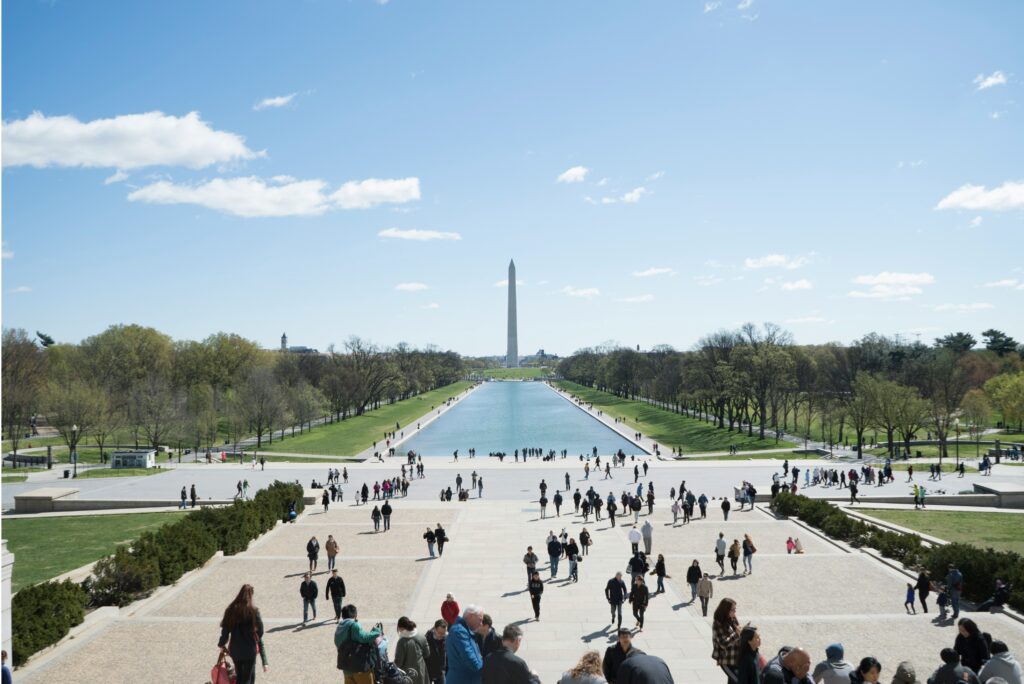
Most schools pick one. D.C. feels obvious: Capitol building, museums, the mechanics of government on display. New York is a different pace entirely: denser, faster, built by waves of people arriving with nothing.
When a group books both, they’re not doing “more of the same.” They’re answering two separate questions, and the sequence matters.
In Washington:
The Capitol tour shows how bills become law. The Air and Space Museum shows what the government chose to fund and why that mattered. By day three, students understand that institutions make choices about what’s worth resources.
Then, on day three, they visit the Holocaust Museum. This isn’t about government failure; it’s about what happens when institutions use their power to exclude and destroy. Students see the policies, the bureaucracy, the deliberate choices that led to genocide. They’re standing in rooms documenting how a modern nation organized murder. It’s the answer to the question they asked in the Capitol: Institutions have power. What do they do with it?
In New York, six days later:
Ellis Island answers a different question: Who got to participate in the American system at all?
The museum there shows immigration records, processing documents, policy changes by decade. Students see which countries’ people were welcome, which weren’t. They see the numbers: how many arrived, when doors opened and closed. They understand the institutions, they studied in D.C. didn’t exist in a vacuum, and they were built by decisions about who belonged.
The Harlem walking tour teaches what happens when people weren’t welcomed into those institutions. A local guide shows the neighborhood where Black Americans built culture, businesses, music, community, outside the systems that excluded them. Students see the actual streets, the buildings, the evidence that this neighborhood was thriving while being systematically excluded from access to capital, education, political power.
Students then visit the UN Headquarters and see: Nations are still negotiating membership and power. The conversation from D.C. – What do institutions do with power? and Ellis Island—Who gets access?

The Customization Question
How do we actually customize this instead of just sending a group to the same places everyone else goes?
For this group, it meant:
- Structured time for independent exploration, not just guided tours. The museums weren’t “here’s what the teacher will point out.” They were “here’s three hours – come find the thing that actually changes your mind.”
- Local guide in Harlem instead of a generic walking tour company. That guide knows the actual residents, the actual stories, the things that never make a museum placard.
- Free evening time in Manhattan. Not “here are five guided options.” Just time to get genuinely lost, find a bodega, sit in a park, understand what living there actually feels like versus visiting.
These aren’t premium add-ons. They’re design choices that change what students actually take home.
What Sticks
The group left with:
- A working understanding of how government actually operates (Capitol tour alone doesn’t do this; the sequence of museums does).
- A tangible sense of how immigration shaped the country they live in (not from a lecture; from Ellis Island, from a neighborhood tour, from real demographics on real streets).
- A memory of moving through a major city without their parents (Central Park, the Brooklyn Bridge ride, getting slightly lost in Times Square).
The After
This is where most trip recaps end, but for schools, the customization question is really: What happens when you get back?
This group has curriculum time built in before they leave. History teachers have already flagged which museums connect to what they’re studying. That means students aren’t passive observers during the trip; they’re actively noting things they’ll discuss in class.
Back home, that matters. The trip isn’t a break from learning. It is learning, just in a different place, with different teachers (local guides included), in a way that sticks longer than a textbook chapter.
