
Why Active Travel Works
The CDC recommends that adults get 150 minutes of moderate activity each week and that kids and teens get 60 minutes a day. On an active trip, you hit those numbers before lunch.
Movement also changes how a trip feels. You notice more on foot, you talk more on a trail than on a train, and a shared climb tends to become the story everyone tells when they get home. For students, finishing a hard hike builds a kind of confidence that carries back to the classroom.
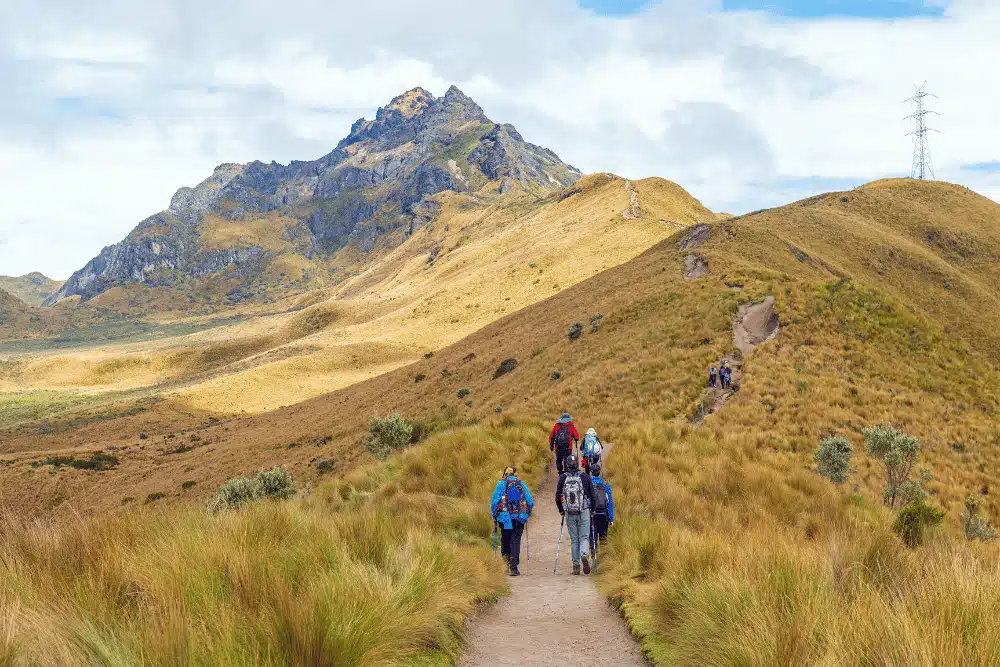
Arthur’s Seat, Edinburgh
Arthur’s Seat is an extinct volcano right in the middle of Edinburgh, in Holyrood Park. The summit is about 823 feet (251 m), and most people walk up and back in about one to two hours. From the top you can see the Old Town, the castle, and all the way out to the Firth of Forth.
It’s a good first hike: challenging enough to feel earned, but close enough to the city that you can be back for lunch on the Royal Mile. In fall, bring layers and shoes with good grip, because the rocks get slick in the rain.
Machu Picchu, Peru
There are several ways to reach Machu Picchu on foot. The best known is the classic Inca Trail, a multi-day trek with a limited number of permits each day. Inside the site itself, some ticket routes include climbs such as Huayna Picchu or Machu Picchu Mountain. These are capacity-limited and have to be chosen when you buy the ticket, not at the gate.
Altitude is the main planning factor. Spending a day or two acclimatizing in Cusco or the Sacred Valley before hiking makes a real difference.
The Grand Canyon, Arizona
The South Rim is open year-round and has trails for every level, from the flat, paved Rim Trail to steep routes below the rim like Bright Angel. The golden rule is that going down is optional but coming back up is not. Plan for the climb out to take roughly twice as long as the walk down.
The North Rim is quieter and higher, with forested trails and wide canyon views. It reopened for the 2026 season with limited services, so bring your own water and check the National Park Service’s current status before you go.
How to Train Before You Go
- Start walking regularly 6-8 weeks before the trip, and add hills or stairs as you go
- Break in your hiking shoes before the trip, not on it
- Do at least one practice walk carrying the daypack you’ll use
FAQ
Do you need to be very fit to do these hikes?
No. Arthur’s Seat and the Grand Canyon Rim Trail suit most fitness levels. Longer treks like the Inca Trail take real preparation.
Are active trips a good fit for school groups?
Yes. Hikes are easy to connect to geology, history, and PE, and they build teamwork naturally.
Want to build a trip around movement? Tell us how active your group wants to be, and we’ll plan around it.
