
If you’ve never taken a train across an international border, Eurostar feels intimidating. You’re leaving the United Kingdom via underground tunnel and arriving in France 2 hours and 15 minutes later. There’s immigration, security. and the fact that you’re literally traveling under the English Channel. For American travelers, especially families and school groups who are used to airports and highways, Eurostar is different than their usual modes of transportation.
Here’s what it actually is, and why it’s genuinely easier than you’d think.
What Eurostar Actually Is (And Isn’t)
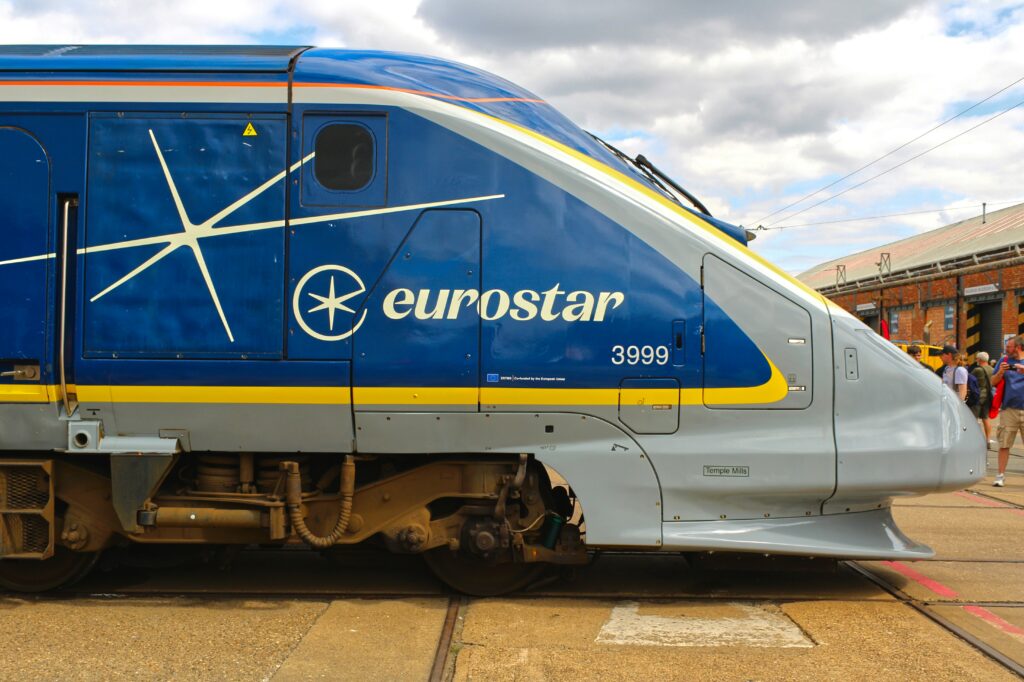
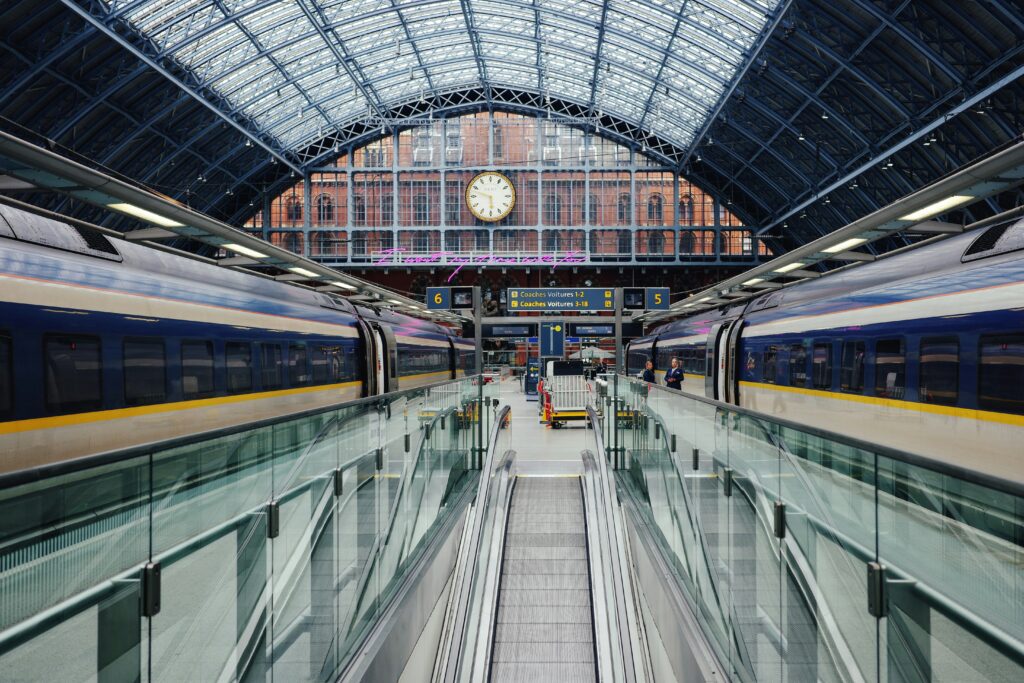
Eurostar is a high-speed train that connects London, Paris, Brussels, and Amsterdam. The London terminal is St. Pancras International, right in central London. The Paris terminal is Gare du Nord, also central Paris. You’re not going to an airport outside the city. You’re leaving from the middle of one city and arriving in the middle of another.
This is the opposite of how American train travel usually works. In the US, train stations are often in inconvenient locations, trains run infrequently, and they’re slower than flying. Eurostar is the opposite: frequent, fast, and city-center-to-city-center.
The tunnel part? It’s seamless. You won’t notice the moment you’re under the Channel because you’re sitting in a comfortable seat reading a book. There’s no feeling of underwater-ness. The train just goes.
Why It’s Different Than Flying (And Easier)
Here’s what nervous first-timers usually say: “But what about immigration? And security?”
Immigration and security happen, but they’re actually less stressful than airports because they’re managed differently.
Security: You go through security screening at St. Pancras about 30 minutes before your train leaves (similar timing to airports, but different process). It’s faster. No taking off shoes, no removing every electronic device. Just bags through a scanner. Done.
Immigration/Customs: This is where it’s different. You clear UK immigration/customs before you board the train in London. You clear French immigration/customs when the train arrives in Paris, while you’re still sitting in your seat. Uniformed officers walk through. They scan your passport. That’s it. You don’t go anywhere. You don’t stand in a queue. You stay in your seat and they come to you.
For a group of 30 teenagers? This is actually brilliant. Everyone stays together. No one’s getting lost. No one’s in a separate line. The process takes about 15 minutes, and then you’re in France.
What You Actually Pack and Bring
This is where Americans get anxious unnecessarily.
What you can bring: One cabin suitcase (carry-on size) and one personal item. That’s it. No checked baggage. This sounds limiting until you realize:
- Most European trips are 7-10 days
- Europeans travel with one carry-on suitcase routinely
- You’ll do laundry mid-trip or pack things that compress
- Not having to wait for baggage on the other end is actually amazing
What you actually need for the journey itself: Passport, ticket (digital or printed), maybe a light snack. You can buy food on the train, but it can be pricey.
What doesn’t work: Large checked luggage. Bikes (unless disassembled). Anything hazardous. But for a school group doing a normal trip? Carry-on only is the standard, and it works.
The Practicalities (The Stuff Schools Actually Ask About)
Timing: For a group, you want to be at St. Pancras 60-90 minutes before departure. Not two hours like an airport. The process is faster.
Getting to St. Pancras from a London hotel: If you’re staying central London (which you should be), St. Pancras is reachable by Tube (subway) or a 15-minute walk. It’s not hidden. It’s right there, major station, everyone’s going somewhere.
Which trains to book: Eurostar has multiple departures throughout the day. For school groups, morning departures are usually ideal (you’re done by early afternoon; you’ve got the whole evening in Paris). Afternoon departures require staying in London overnight, which adds cost. Morning departure = London breakfast, then Eurostar, arrive Paris mid-afternoon, settle in, dinner, explore.
What happens on the train: It’s comfortable. Seats are spacious. Free WiFi works most of the time. A trolley comes through with food and drinks (pricey, but optional). There’s a toilet (small, but functional). Some groups watch movies on laptops. Some read. Some just look out the window as the landscape changes.
Boarding is straightforward: you line up, they scan your ticket, you find your seat number, you sit down. It’s genuinely smooth.
Why Eurostar Matters for Schools Specifically
American schools booking European trips often ask: “Can we just fly London to Paris instead of taking Eurostar?”
Technically yes. Practically, no. Here’s why:
- Flight logistics are worse for groups. Airport security, separate immigration queues, baggage claim, transportation to/from airports on both ends. For 30 people, this is chaos.
- Cost difference is minimal. A cheap flight might seem cheaper until you add in baggage fees, transport to/from airports, and time spent.
- Eurostar teaches something. Not everyone has taken a high-speed train. Not everyone has cleared immigration while sitting down. Not everyone has understood how European train infrastructure actually works. For students from North America, Eurostar is a thing they do on the trip. It’s an experience, not just logistics.
- It keeps the group together. You’re all on the same train, no one’s in a different security line, no one’s waiting for a delayed flight connection. The group stays unified through the transition.
- You arrive in the city center. No 45-minute shuttle bus ride from the airport. You’re in Paris proper within 15 minutes of arrival. Evening activities start on time.
What Teachers Should Actually Communicate to Parents
Parents get nervous about Eurostar because they’ve never done it. Here’s what actually helps:
- “Immigration happens on the train, not in a queue. You stay in your seat.”
- “You only bring a carry-on suitcase. No checked bags.”
- “It’s faster than flying when you factor in everything else.”
- “It’s a high-speed train that’s extremely comfortable and reliable.”
- “The group stays together the entire time.”
Once parents understand those five things, the nervousness evaporates.
