
Oxford as a tourist destination is easy: punting, the Bodleian, maybe a college chapel if the door’s open. And you’ll see something lovely.
Oxford as a place where you actually understand how centuries of history, literature, and institutional complexity live in one city? That requires a different approach.
For schools choosing to add Oxford to a London trip, the real question isn’t “what is Oxford?” It’s “what does being in Oxford teach about English history and culture that you can’t learn from a textbook or from visiting London alone?”
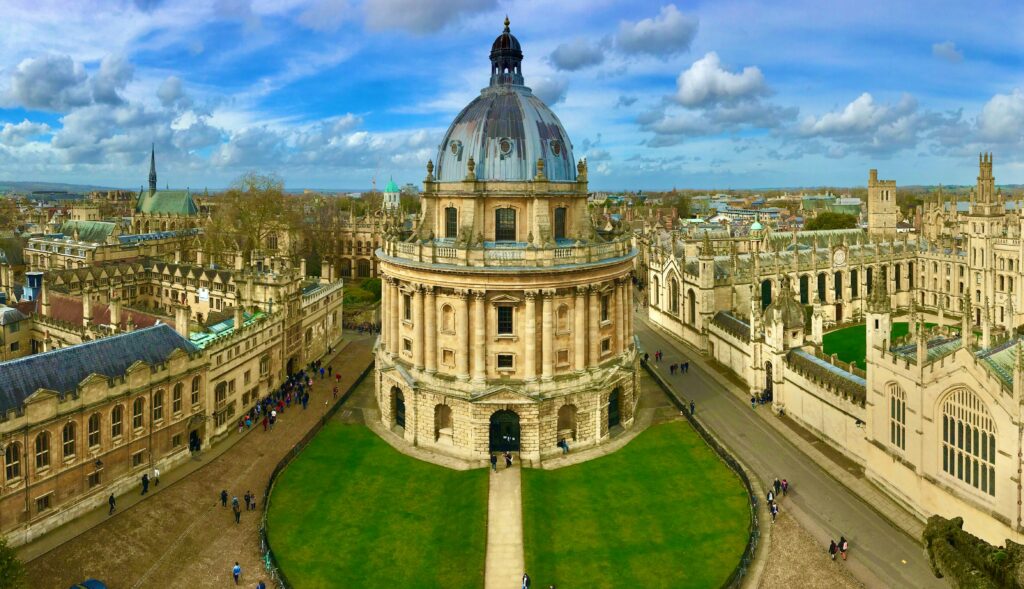
The College System Isn’t Decoration
Most visitors notice the architecture: honey-coloured stone, quads, ancient gates. It’s beautiful, and it photographs well.
But the college system is the actual skeleton of how Oxford works and once you understand it, you can’t unsee it when you read English literature or history afterward.
Each college is independent. They have their own halls, their own gardens, their own traditions. They compete, cooperate, and are centuries old. And they directly shape what students study and how they study it.
This matters for history students because the colleges themselves are British history. Christ Church produced a specific type of politician in the 18th century. Somerville produced Oxford’s first female scholars. Oriel has played a specific role in theological education. These are the actual architecture of how ideas moved through time.
For English students, reading about Oxford in literature is one thing. Standing in the quad where those books were written, seeing the actual library where the manuscripts sit, understanding the physical constraints and privileges of what studying here meant makes it comes to life.
What’s Different About Visiting with a School Group
Visiting Oxford alone as a tourist, you’re trying to fit the place into a few hours. You go to the main sites, you buy a postcard, you leave.
When a group visits with a school, they have:
- Time to actually walk the colleges. Not rushing through; slow enough to notice details.
- Time in the Bodleian Library. Seeing where rare books are kept, understanding the sheer age of what’s been collected, getting a sense of what studying in an environment where knowledge has been accumulating for 500+ years actually feels like.
- Talking to people who study there. If the college allows it, connecting with current Oxford students matters enormously. Not a formal tour guide performance, but actual conversation about what it’s like to study in a 400-year-old building while your roommate is writing a thesis on medieval manuscripts.
The Curriculum Connection
Here’s the hidden value: for English and History focused students, Oxford-specific knowledge becomes shorthand.
If you’re studying Victorian literature and you’ve actually been to the colleges where those writers studied, where they drank, where they argued about ideas, the texts read differently afterward. Not because Oxford is magical but because context is everything, and you now have it.
For history students studying British institutional development, the college system is a case study in decentralized governance, tradition, and gradual change. It’s not just “Oxford is old and famous.” It’s “This is how knowledge got preserved and transmitted across centuries when institutions changed around it.”
These aren’t just nice-to-knows. They’re the thing that turns a trip into learning.
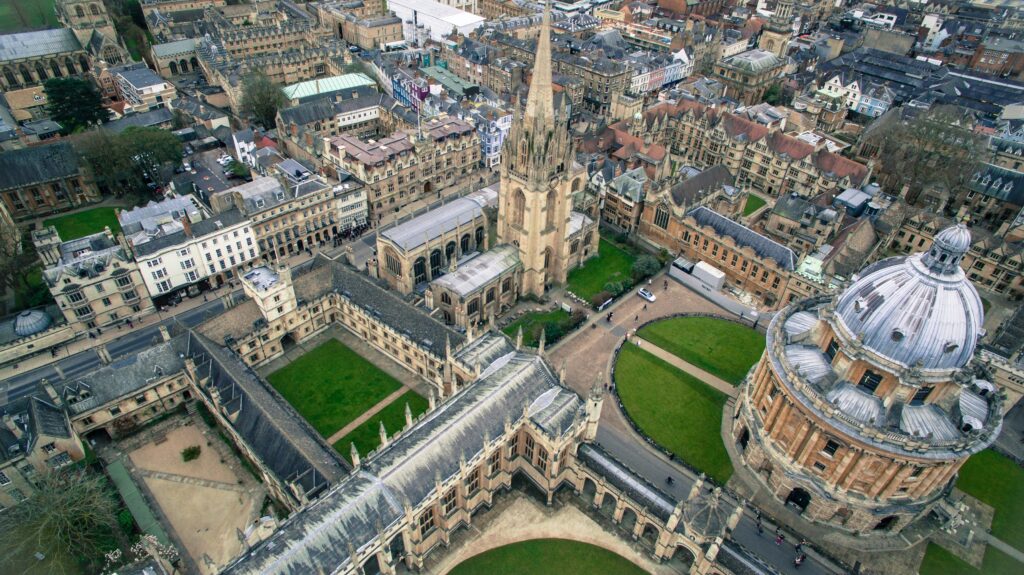
The Practical Piece
What we actually do when a group adds Oxford:
- Day trip from London (most common) or overnight stay (if it fits the budget and the group wants more depth).
- College access: Some colleges allow group tours; others don’t. We arrange in advance and know which doors actually open, so groups aren’t lined up outside a locked gate.
- Bodleian access: Student groups can visit; it’s not open to the general public the way other museums are. We handle the logistics beforehand.
- Local guide or college student tour (if available): This changes the quality of the experience. A guide who’s actually studied here knows what to emphasize and why.
- Walking time built in: No rushing. The point is slow looking and noticing details.
What Stays With Students
Groups come home with:
- A concrete understanding of how the college system works, not as an abstraction but as a thing they’ve walked through.
- Answers to questions they didn’t know they had (Why are the colleges independent? What determines which college does what? Why do some look so old and others so new?).
- Context for everything they read afterward about Britain: literature, history, politics. Oxford becomes a reference point.
- Photos and memories that are genuinely theirs, not stock images everyone takes.
For high school students, this is the kind of trip that makes the coursework more interesting later. They’re not writing about Oxford as a thing they read about; they’re writing about a place they’ve been.
