
Few museums in the world are as closely tied to the story of their city as the Uffizi Gallery in Florence.
The Uffizi is not just a container for famous art. It is a product of political ambition, cultural investment, and a belief that art and civic life belong together. Understanding how it came to be helps explain why it remains one of the most visited and carefully managed museums in the world today.
How the Uffizi Came to Be
The word Uffizi comes from the Italian word uffici, meaning “offices.”
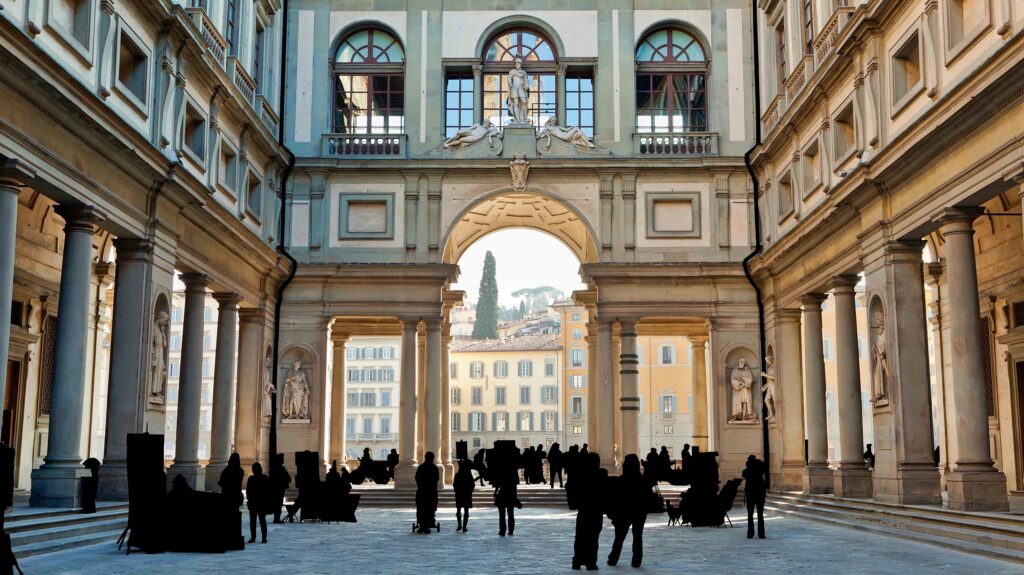
In the mid-1500s, Cosimo I de’ Medici commissioned the building as a place to house Florence’s administrative offices. Designed by Giorgio Vasari, the structure was meant to centralize power and create order in the city. It was not originally intended to be a public museum.
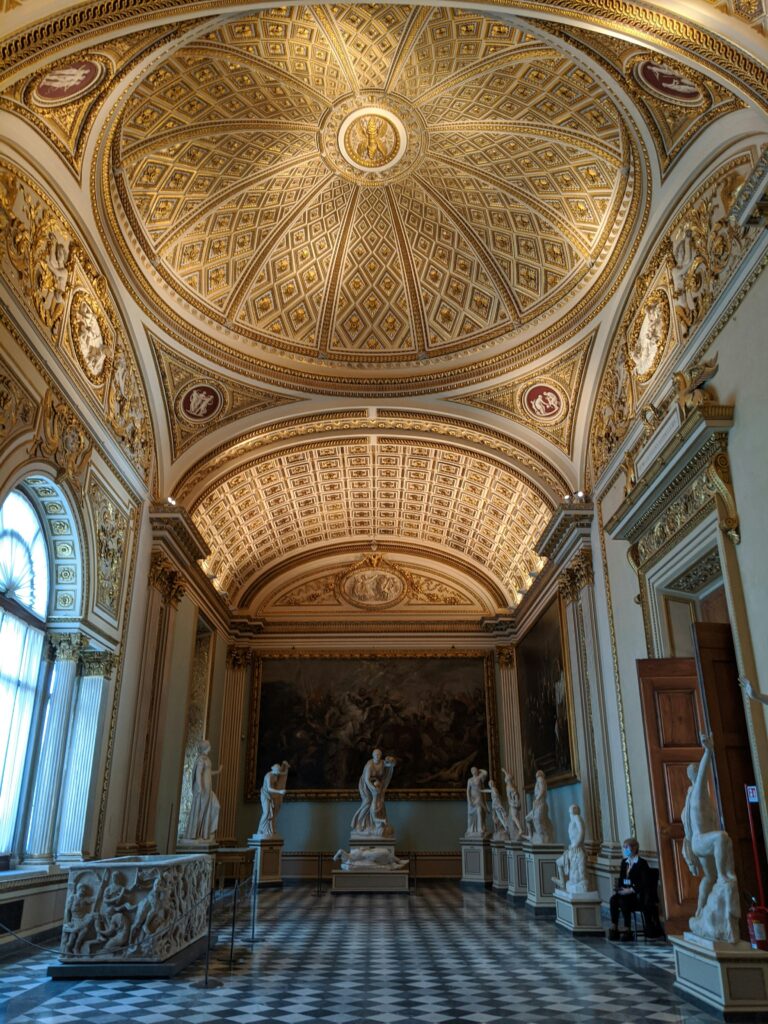
Over time, the Medici family began displaying their growing art collection inside the building. These works reflected wealth, influence, and intellectual ambition. By the 18th century, the collection was formally opened to the public, making the Uffizi one of the earliest modern museums. What began as government offices evolved into a space where art, politics, and public life intersected.
Notable Works Inside the Uffizi
The Uffizi is best known for its collection of Renaissance art. While the gallery houses hundreds of works, a few are especially significant because of their historical influence rather than their popularity alone.
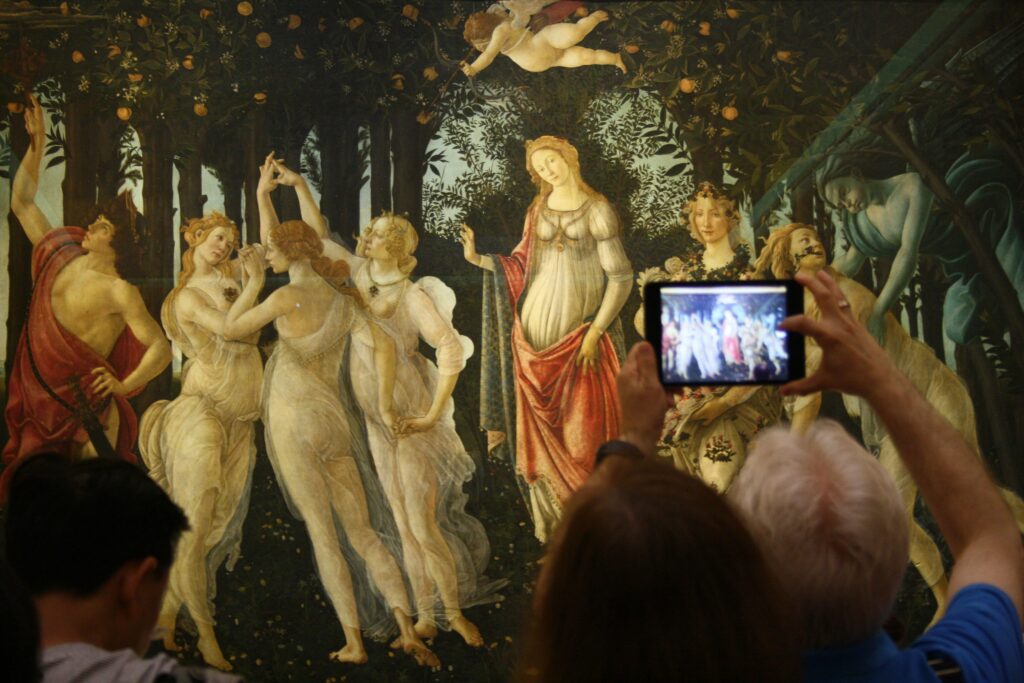
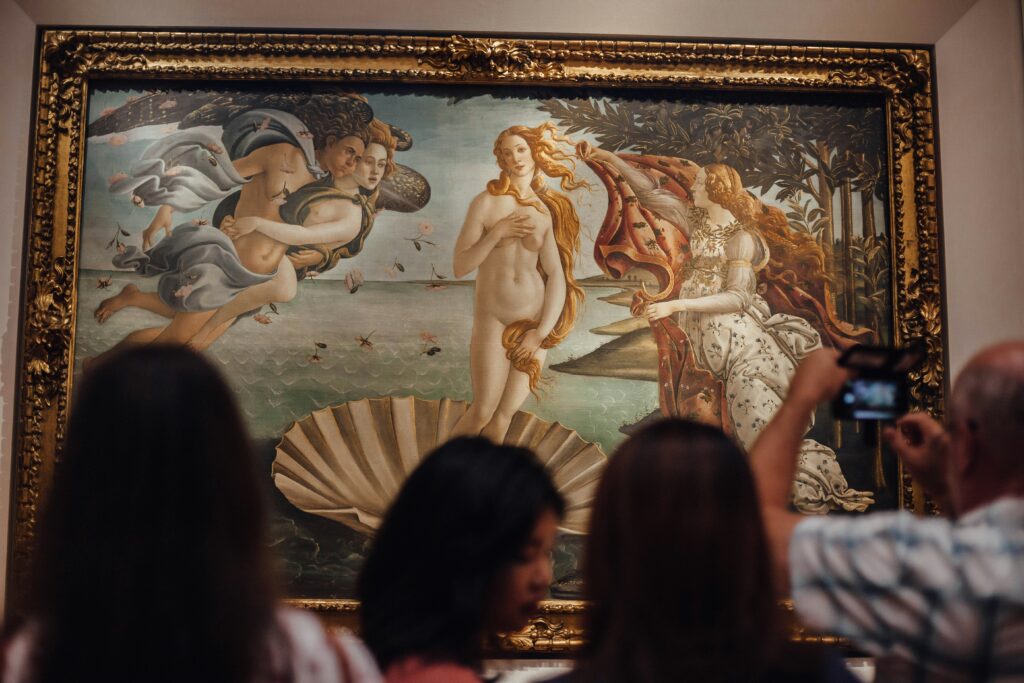
Visitors encounter works by artists such as Botticelli, Leonardo da Vinci, Michelangelo, Raphael, Giotto, and Caravaggio. Paintings like The Birth of Venus and Primavera are frequently discussed because they represent shifts in artistic style, symbolism, and humanist thought.
What makes these works meaningful is not only their beauty, but what they reveal about how people once understood faith, mythology, power, and the human form. Seeing these pieces in person allows viewers to understand scale, detail, and technique in ways reproductions cannot.
What the Uffizi Means Today
Today, the Uffizi represents both opportunity and responsibility.
It is a place of learning, inspiration, and cultural preservation. At the same time, it faces the challenges that come with global tourism, including crowd management and conservation. As a result, access to the Uffizi has become increasingly structured.
Timed entry, advance reservations, and group regulations are not inconveniences. They are part of preserving a space that belongs not just to visitors today, but to future generations. For students especially, visiting the Uffizi is an exercise in respect. Respect for history, for shared cultural heritage, and for the care required to maintain it.
What This Means for Future Travel
Travel to the Uffizi now requires thoughtful planning. Booking in advance is essential, particularly for larger groups. Availability can fill quickly, and entry rules are strictly enforced. This is not a museum where last minute access can be assumed. Groups must also follow Italian regulations regarding guiding. Licensed local guides are required for group tours, and these guidelines exist to protect both visitors and the site itself.
Working within these systems allows for a smoother experience and ensures that visits are educational rather than rushed or disruptive. The Uffizi remains one of the world’s great museums not because it is easy to access, but because it is carefully protected. Thoughtful travel planning respects that reality and allows visitors to experience the gallery as it was intended.
A Thoughtful Way Forward
Places like the Uffizi remind us that meaningful travel requires care, preparation, and respect for what has been preserved over centuries. Visiting a museum of this significance is not just about entry. It’s about timing, context, and understanding how to move through shared cultural spaces responsibly.
At Kairos Tours, we work within local systems and regulations to help groups experience places like the Uffizi in a way that is educational, well-prepared, and respectful of both the site and the people who care for it. When travel is thoughtfully planned, it allows students and educators to focus less on logistics and more on learning.
